Romanization of Chinese

Romanization is a way of writing non-English languages using English characters. There are many ways to romanize Chinese. It is very confusing, since there different spelling of a Chinese term in English. People grew up in China use Pinyin, which is the standard romanization based on Mandarin. Older translation uses the Wade-Giles system, which is popular in most of 20th century and still used in Taiwan. The major problem of the Wade-Giles system is that it is not very accurate. In some cases, it cannot distinguish similar pronunciation and create confusion. On the other hand, we can tolerate the lack of accuracy. I found the Wade-Giles system is easier for English speaker to pronounce and remember the terms. Maybe Wade-Giles is designed by Englishman, the spelling looks more like a normal English words. Pinyin is more accurate in phonetics, but the j, q, x, z looks odd in spelling.

Hong Kong has its own system of romanization, or should I say lack of a system of romanization. The HK government has a table of commonly use Chinese characters, but there is no coherent rules in the table. Some characters, such as tree, has two different correct spelling in the table. Most people in HK don’t know how to romanization Cantonese. If we have to romanize any characters, we simply do it in an ad hoc way. On a second thoughts, HK is a bilingual city, most people know Chinese as well as English. There is no need to romanize Chinese, we can simply use English instead. Maybe romanization is only helpful to foreigners who wants to learn Chinese.

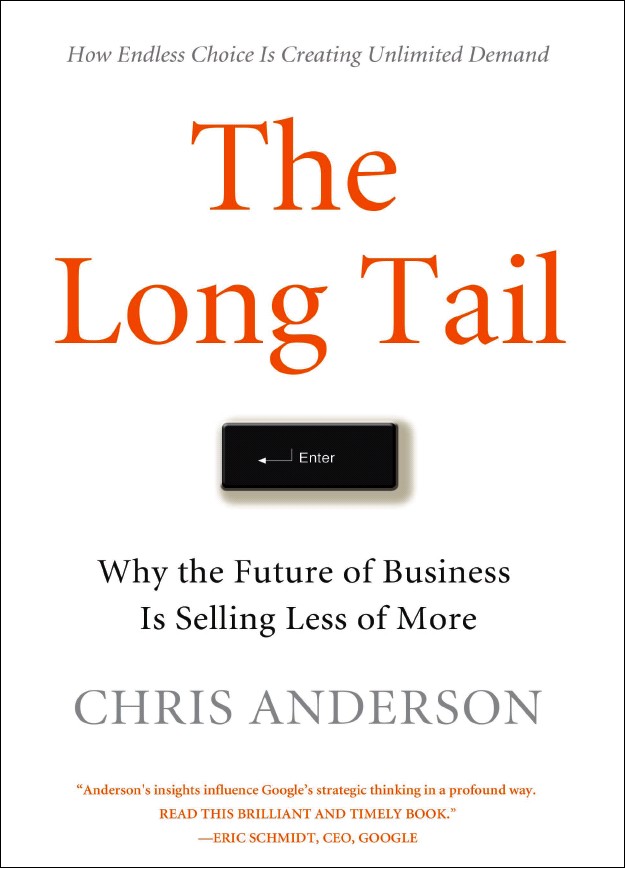
The Long Tail – Chris Anderson

The Long Tail Wired雜誌的老總Chris Anderson﹐在2004年寫了一篇文章﹐探討因互聯網而興起的新經濟模式﹐並把他的發現稱為長尾理論。在傳統的零售市場中﹐大部份交貿集中在熱門商品上。長尾理論則指出﹐冷門商品雖有交貿不多﹐但是不論幾冷門的東西也有人賣。正所謂山大砍埋有柴﹐冷門商品的種類繁多﹐雖然每種只能賣出少許﹐但若果把它們的收入加起來﹐卻會成為是一個很可觀的數目。事隔兩年作者把他那篇文章發揚光大﹐加入更多內容出版結集成書。不過可惜此書甚為長氣﹐大部份時間只是不斷重彈老調。

作者用了超過一半的篇幅﹐不繼提出長尾的例子﹐妨忽死怕讀者不相信真的有長尾。也許在互聯網興起前﹐很難預期長尾經濟模式的出現﹐但對於互聯網長大的新一代﹐網絡長尾的特性差不多已成為常識。作者從Sears的郵購目錄開始﹐一路講到Amazon﹐ eBay﹐ iTune﹐將長尾的歷史娓娓道來。其實每次也是重覆同樣的經驗﹐當貨品種類大幅增多客源上升﹐便會發生經濟規模的威力﹐原本蝕錢冷門商品也可以帶來利潤。在傳統的經濟模式下﹐商店能夠提供的貨品種類﹐受到商品陳列物理條件的限制﹐冷門商品沒有足夠客源去維持。到了互聯網時代﹐增多一件冷門商品的成本接近零﹐同時又打破了地域限制﹐把客源拓展至全世界﹐於是以前蝕本的冷門商品也能維本。加起來的數目實在很大﹐可以比媲熱門商品的營業額。而冷門商品的競爭相對較少﹐甚至比競爭激烈熱門商品有更可觀的利潤。

長尾的出現為消費者提供接近無限的選擇﹐而然太多選擇會讓人花多眼亂。甚至有學說指選擇太多反而不好﹐會令人感到沮衰和不快樂。作者很老實地承認長尾雖長﹐但有當中很多大部份是垃圾﹐至少對不感興趣的人也與垃圾無異。於是如何幫助消費者從長尾中尋寶﹐是新經濟模式能否成力的關鍵。互聯網科技的發展﹐正好提供消費者在長尾中找到心頭好的指引。強大的搜索引擎﹐同好者的網上聊天室﹐網絡上各式的排行榜和評論﹐網絡商店從顧客的歷史中﹐找出相似品味作推介﹐均是替消費者過濾長尾的好幫手。作者亦引用心理學研究﹐發現原來選擇多會讓人感到更開心﹐只要其選擇受到別人的肯定和認同﹐而又能很有系統地找出想要的東西。

有些人擔心長尾現像會令社會分化﹐人與人之間再沒有共同的話題和文化。作者指出熱門現像並不是常態﹐只是二十世紀後半葉﹐廣播和娛樂工業興起後才出現。每個人的品味本來就很多樣化﹐大部份人只在膚淺的層次有共通之處﹐深入的趣興因人而異﹐越深入更是越趨少眾化。只是因為受經濟和物理因素所限﹐大部人不得爾才接受大眾平庸化的熱門商品。熱門商品是從上而下的推廣﹐業界專才賞試預測大眾口味﹐希望可以打造出能吸引最多人的商品。長尾商品則是橫向推廣﹐本來名不經傳的冷門﹐可以在網絡社群中﹐以人傳人的方式建立口碑﹐在小眾市場站穩陣腳後﹐更可以衡出長尾反攻主流成為熱門。

我想這本書的主要讀者群﹐應該是那些還未懂新經濟的傳統人。長尾理論聽起來疑似很高深的學問﹐說通了不過是經過學術包裝的網絡常識。這本書寫於零五年﹐才不過短短三年時間﹐書中的例子已顯得十分過時。當年還未有Youtube和Facebook的出現﹐書中不斷用Google Video和Myspace作例子﹐聽起來好像是說史前恐龍的故事。今年作者推出新修版﹐更長尾巴的長尾理論。我上Amazon打書釘﹐看了新增的那一章﹐講述車廠如何用Web 2.0去推廣新車。汽車廣告與長尾理論風馬牛不相及﹐夾硬把兩者拉上關係好像有點牽強。可惜作者再一次失手選錯例子﹐他拿來當例子的車廠可是現今瀕臨破產的GM。噢~ 或許他是故意用這例子也說不定﹐GM汽車沒有人會買﹐當然是長尾的冷門貨了。

The greatest Indian + Japanese + Canadian fusion idea.

We were talking about single engineers at work are having a hard timing finding girlfriends. They are distracted from work for looking for a mate, so they are not performing at their peak productivity. Here we come up with a great idea to solve this problem. Arranged marriage is popular in India. Most of my colleagues in the India office met their wives through arranged marriage. It is obvious that arrange marriage is benefits boring engineers who lacks dating skills but somewhat appealing to the parents. On other hand, Japan does not have arranged marriage, but it is common for Japanese companies match making their employees.

Maybe we can combine the two systems, the company can simply arrange marriage its single employees randomly. Now, the single guys has found their other half, they don’t have to worry about finding a wife, so they can concentrate on work. However, gay marriage is legal in Canada. In order not to discriminate against the homosexual, the company should ignore the gender difference when arranging the marriage. After all, we are an engineer firm with more male than female, we don’t have enough single female for the single male, so some guy will end up pairing up with a male wife.

Indian arranged marriage + Japanese corporate match-making + Canadian legalized gay marriage + a company full of single male engineers = ?

Health service in Vancouver

Canada is famous for its medicare system. It is expensive, that’s why our tax rate is so high. I never understand why it cost so much until my father in law has a surgery in the Vancouver General Hospital. The surgery is a success, the treatment is fairly good. When I visit him in the hospital, my first impression is I am in a business hotel. The decoration and finishing of the lobby does not look like the hospitals I had in mind. He got a private room for his recovery and there are more than enough nurses in the ward. He is recovering pretty fast, it is able to sit up, walk and eat within a few days. Originally, the nurse told us he can be discharged on Monday. But the hospital don’t have psychotherapist on weekend, so we have to wait until psychotherapist session on Monday. Then the nurse told us he can be discharge on Tuesday afternoon. It turns out they are still waiting for one of his lab report from a test in Tuesday morning. The report won’t come back for another day, so my father in law will have to stay in the hospital until Thursday if the nurses did not forget anything else. If the hospital could stream line the work, take the test on Sunday and arrange the psychotherapist over the weekend, then we can take him home on Monday as planned. Oh! Did I mention he got a private room? Our health system is so inefficient, no wonder it cost so much to the tax payers.

I drove all the way to VGH to pick up my father-in-law without know he can’t be discharged today. It is a total waste of my time. Maybe the hospital should learn from the airport, setup a website for the family of patients to check discharge status. Like the arrival information in the airport, you can see whether the discharge is delayed or not. Then my friend, Chris, hear my idea and joke about this idea, maybe they should add the canceled status like a flight. If the patient is canceled, you don’t have to pick him up anymore, because he is already dead. Pat said it is cruel and suggested the cancel status change to the departure gate to Heaven.

同性伴侶不是家庭

這幾天香港立法局好不熱鬧﹐因為家庭暴力條例的修訂案中﹐讓立法局議員兩面受敵﹐給同志陣營與保守宗教團體兩面夾攻﹐正是左右做人難。條例本身的內容倒沒有大爭議﹐各方面大至也同意擴大條例的保護笵圍﹐包括同性和異性同居等人。問題卻出在條例的中文譯名上﹐同志陣營堅持要保留家庭二字。宗教團體則認為把同性伴侶納入家庭笵圍中﹐是為同性婚姻合法化開綠燈﹐要求把條例家庭二字改作家居。反而條例英文名字倒沒有問題﹐domestic一字意思明確沒有爭議。

這次爭議核心的問題﹐是家庭的定義是否包括同性伴侶。同志陣營認為﹐二人以長久一起生活為目標﹐有情感或物質上的依懶性﹐就是家庭的定義。可是法律貴乎清析﹐情感關係或生活目標﹐並不是一個客觀條件﹐完全是主觀的個人意見。我們如何在法律上﹐分辨一對同性戀同居者﹐與兩個同住的室友呢﹖若果一方認為他們有感情關係﹐另一方認為他們只是普通關係﹐那條例是否適用於他們身上呢﹖所以我們必需要用一個客觀的標準作為家庭的定義。

在社會學結構論的角度來看﹐家庭是培養下一代的最重要一環。因此家庭定義的客觀標準﹐應該以血緣關係為基礎﹐以及基於血緣關係而衍生的其他關係。兩夫婦原本沒有血緣關係﹐但因為他們生兒育女﹐讓他們二人的血脈相連﹐組成一個家庭。兩婆孫同住也是家庭﹐因為他們有血脈相連﹐透過孫兒的父母把他們連接起來。換一句話說傳宗接代才是家庭的本質﹐若果沒有下一代的血脈的聯繫﹐不管兩個同居的人心理狀況如何﹐他們也只是伴侶關係﹐並不能算是組成一個家庭。我們可以視為異性同居者為婚姻的向前申延﹐他們二人以末來生育為基礎﹐現在已居住在一起的準家庭。

一來同性伴侶會引起家庭歧義的問題﹐二來同性伴侶不能生育﹐永不可能建立血緣關係。很明顯家庭的定義並不包括同性伴侶﹐因此為免條例名稱引起不必要的誤解﹐應該刪除家庭二字。