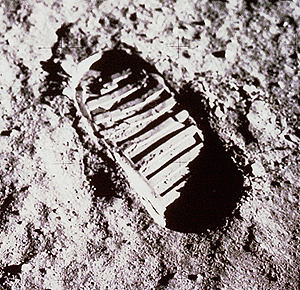
One small step for a man, one giant leap for mankind

Apollo11-moon-footprint

Today is the 40th anniversary of moon landing. July 20 1969 astronauts from Apollo 11 set foot on the moon surface. “One small step for a man, one giant leap for mankind” is the famous quote from Neil Armstrong. Unfortunately, mankind still haven’t able to made the second leap. After the Apollo mission is canceled in 1972, man has never return to the rock flowing in the night sky. Compare to the Apollo mission, the space shuttle and international space station barely touch the other side of the atmosphere of the Earth.

When I was small, I always fantasy by space adventure, dreaming one day I could travel to space like the astronauts. I thought within my life span, I can witness space tourist for average people and maybe even a resort hotels on the moon. Somehow mankind seems lost their interest on space. Space exploration becomes boring academic and scientific exercise. I am probably the last the generation that grew up with space aspiration. Nowadays, youngster instead of looking up the sky, they look downward back to Earth. They concern more about environment problems than further expanding the horizon of mankind. When green is trendy, man are doomed to bounded by the gravitational pull, forever wasting our attention on mundane issues. When space becomes cool again, only then man can unleash our imagination and evolve beyond the current level.

Element of humor

I am working on my “Humorously Speaking” manual for my Toastmaster program. Some people seems to have natural talent with a good sense of humor, but humor can also be learned. You just have to remember the basic principle of humor and practice, everyone can become a decent joke master.

Telling a joke always has 5 basic parts. The first part is the set-up. It builds up the expectation of the audience so you can surprise them later. Then it follows by a pause to draw the attention of of audience. Then the punch line is the sentence that creates humor. Within the punch line, there is a punch word, the word that triggers the laughter. After the punch line, follow by another pause to give the audience time to absorb the joke and enjoy it.

A joke starts with a target, someone or something you want to make fun of. Hostility to the target in subtle or obvious way is fun. But because choosing a target that suits your audience. Sex, racial, religion jokes sometimes may be offensive to some people. Then use exaggeration and emotion to draw the attention of the audience before surprising them with the punch line. Humor must be unexpected. The joke would be less effective if you laugh at your own joke or you tell the audience you are about to tell a joke.

There are eight handy methods to construct the punch line:

  • Exaggeration, push your imagination to make the tales sounds absurd.
  • Incongruity, two genuine points followed by an radical point.
  • Reverse of view point
  • Definition to distort the meaning of the subject
  • Combination the characteristics of two totally unrelated items
  • Play on words, use words with different meaning in different context
  • Understatement, the opposite end of exaggeration
  • Implication, let the audience draw the missing connection

Here are some examples:

Philosophy is so difficult that even philosophers don’t understand it. (Exaggeration)

Talking philosophy in a date makes you sound intelligent, sophisticated and boring. (Incongruity)

Nietzsche says God is dead; God says Nietzsche is dead. (Reverse of view point)

The cost of doing philosophy research is minimal, it only have food and shelter the philosophy. The easiest way to apply for philosophy research grant is through social welfare. (Definition)

A moralist questions others morality, a skeptical moralist questions his own morality. (Combination)

Why an immoral person wearing a T-backs? Because he wants to become immortal. (Play on words)

Sophie’s boyfriend is a philosopher; He loves Sophie. (Understatement)

Philosophers thinks about all sorts of questions except the question “How to earn a living?” (Implication)

Encouraging competitiveness

Competition is good, but too much competition is bad, which actually lower the performance. Can we apply the result of this research to question some fundamental assumption in market economy theory?

Continue reading Encouraging competitiveness

The Essential Druncker – Peter F. Drucker

400000000000000046350_s4

Peter Drucker是上世紀最具影響力的管理大師﹐他撰寫的管理理論影響一整代企業文化。這本書從他生前的著作中﹐輯錄了二十六篇文章﹐總結他管理學的智慧。有別於市場上一般的商管書藉﹐這本書沒有多餘的水份﹐每篇文章的內容充實到題。若以智識含金量計算﹐每篇文章的主題也可以獨立成書。可能Drucker讀哲學出身﹐在研究管理學前當哲學教授的關係﹐這本書很強調管理學的理論性。若果以為管理學只是吹水學﹐不過把常識包裝起來的學問﹐這本書則從最基本的慨念出發﹐解釋為什麼那些常識之所以為常識﹐而不是隨便任何東西也能成為常識。

這本書可以說是關於管理學的哲學。當然在商企書藉中﹐哲學這一個詞語已被過份濫用﹐失去哲學原本的意義﹐成為這就是某一套觀點的代名詞。不過我在此所說的哲學﹐是回歸哲學原本的學術定義﹐嚴緊地提問what is這問題。書中每一篇文章也是圍繞一個核心問題﹕what is management﹖

這本書分為三個部份﹐第一部份講述管理學的基本﹐管理學包括理性數字化的商業技巧﹐亦包括軟性的溝通技巧﹐但歸根究底管理學如何讓一群完全不同的人﹐在同一個群體或機構下﹐能夠合作生產出有用的商品或服務。管理層的存在價值﹐在於生產出經濟成果﹐讓僱員能更有效率地生產﹐滿足顧客和社會的需要。

很多人有一個錯誤的觀念﹐認為企業的存在意義就是賺錢。企業存在的唯一目的﹐是提供服務和商品去滿足顧客的需求﹐賺錢只是用來衡量企業是否有效率地運作﹐為社會創造財富或是在消耗財富。企業不是賣服務和商品給顧客﹐而是賣那些服務和商品為顧客帶來的功用價值。企業只有兩個功用市場和創新﹐市場就是創造新的顧客﹐而創新則是更有效率地服務顧客。唯有顧客才能夠肯定企業的存在和身份﹐利潤只是企業繼續生存的保障。管理並不是要盲目追求最多的利潤﹐而是要找出若要達成所有企業的發展目標﹐減去風險因素後﹐必需要可持續賺取的最小利潤。

企業並不憑空存在﹐而是依附在社會上才能夠生存。社會容許企業存在﹐是因為企業生產為社會帶來好處。當企業對社會帶來害處時﹐社會可以在一夜間改寫遊戲規則﹐讓企業不能繼續生存。管理層對社會沒有責任﹐但有責任令企業繼續生存﹐不要讓企業成為社會的敵人。管理不只要看今天社會的訴求﹐還要預備明天社會的訴求﹐社會轉變對企業也是一個商機。企業對社會並不有無限責任﹐而責任亦必然伴隨權力。要求企業有無限責任﹐便是等給與企業無限的權力。企業只能夠做能力範圍內的事﹐當然大前題是企業必需能夠賺取可持繼生存的最小利潤。

第二部份是管理學與個人發展﹐這部份的內容與市面其他管理書藉類同﹐都是講述有效率的管理人應如何管理時間﹐作出正確的決定﹐審視自己的能力和如何與別人溝通。分別是此書不會用那些道聽途說的小故事﹐來當增加說服力的幌子﹐而是解釋為什麼這樣做能夠增加效率。第三部份是講述智識型經濟對社會和企業管理帶來的衡激。我自己認為最後一部份寫得有點鬆散﹐一來課題太大很難在數章中完整地掌握﹐二來始終也是幾十年前的文章﹐現在看難免有點過時的感覺。

企管書藉推陳出新﹐每年也有很多新書面世。當中有些會流行一段日子﹐然後被人遺忘﹐直至同一個管理慨念被重新包裝為新的一本書。但更多管理書藉更是濫芋充數言之無物﹐欺騙讀者金錢浪費讀者時間。這本書是少數能夠經得起時間考驗的企管經典﹐不論是現在看還是十年後再看﹐書中的企管理論和知識也不會過時。

Iconfinder

Iconfinder provides high quality icons for webdesigners and developers in an easy and efficient way.
Continue reading Iconfinder