Category Archives: 哲學

李天命是哲道行者﹐我乃是哲道閒人。在哲學的道路上行行企企﹐混混鱷鱷﹐四處遊蕩。

哲學功課﹕ Modified Principle of Justice

七十年代John Rawls提出自由主義對左翼政治思想有很大影響﹐當中以他用無知之幕作為起點的推論﹐更常被引用作支持重新分配資源的社會公義。他師承康德道德哲學﹐認為先驗理性能推論出社會公義。他認為公義就是公平﹐是每個人理性地自願參社會契約﹐並履行社會契約的義務他同時認為與每個人生俱來的地位或天賦帶有隨機性﹐所以在道德上並不屬於持有者所擁有。因此使用地位和天賦得來好處和財富﹐應該要與社會上的其他人分享。

Michael Sandel則提出相反意見﹐運用康德的道德哲學﹐推翻Rawls的正義論中的內在矛盾。他指出就算地位和天賦的好處並不屬於持有者擁有﹐也不能把那些好處自動申延為社會共同所擁有。若果把地位和天賦的好處從個人強行剝奪﹐重新分配給社會上其他人﹐ 則犯下與功用主義相同﹐不遵重個人自主權的道德問題。他認為重新分配資源應要建立在社群身份認同的基礎上。每個人對社會其他人的責任﹐僅限於推己及人的原則之下。你沒有責任去資助你不認同的生活方式。舉個例子說明。在Rawls原本的理論中﹐天生聰明兼工作努力收入高的人﹐應該要把他們的工作成果﹐與其他收入低的人分享。不論那些收入低的人是因為天生能力所限﹐還是他們選擇懶散地過活。Sandel的理論便指出﹐勤力的人資助懶散的人有違公平﹐因為他們間並沒有共同的價值觀﹐久缺一個共通的身份。

這篇文章分析討論Sandel對Rawls的批判﹐源用康德的道德哲學作推論﹐嘗試提出一套新的修正公義論﹐來回應的原本理論的質疑。

Modified Principles of Justice

In this essay, I am going to evaluate Michael Sandel’s constitutive ties antithesis on John Rawls’ Theory of Justice. First, I will lay out the argument of the antithesis, then I will consider its objection and at last I will provide a synthesis to resolve the inconsistence in the two theories.

In [1], Sandel argues that Rawl’s two principles of justice suffer from the same problem as the utilitarianism, which “fails to take seriously distinctness of persons” [1:243]. Sandel agrees with Rawls on the presumption of the liberal vision. Both of them are disciples of Kant. They take the deontological view on rights, maintain that moral laws require a categorical foundation, oppose to a contingent one as in utilitarianism. A just society should not promote a particular version of good. It should allow its citizens to pursuit their own concept of good, given that each citizen has similar liberty. Both of them agree rights precede goods, such that individual rights cannot be sacrificed for a general good and these rights cannot be premised on any particular vision of a good life.

In Rawl’s original position, every person is assume to be a rational agent and is assume to stay behind a veil of ignorance. Everyone does not know any social attribute or natural talent about himself nor his own concept of good. Sandel criticizes Rawl’s original position rules out the possibility of constitutive ends of self. According to Kant’s metaphysics, there is always a distinction between the value I have and the person I am. An unencumbered self must first has a prior existence to provide the standing ground for the social attribute, natural talent or concepts of good that tie to the person. “What matters to the unencumbered self is not the ends that we choose, but our capacity to choose them” [1:242]. In order to establish the rights are prior to the good using Kantian ethics, the self has to be prior to it ends. A free and independent agent is capable of free choice only if the self’s identity is never tie to any aims or interest of the encumbered self. The free choice of the unencumbered self on the concept of good should be honored as long as they are not unjust. Our concept of good carries weight simply because in the virtue of our choice.

Sandel then goes on to criticize Rawls’s difference principle runs into serious problem. The difference principle states that “inequality are permissible only when they are to the benefit of everyone affected by the inequality, in particular to the least well off; must be attached to offices and positions open to all” [2:637]. According to Rawls, man does not deserve to profit from his innate social status or natural talent because those good fortune are arbitrary. Those benefits should be shared by everyone since it is only fair and hence just. Sandel points out there are logical gaps between the assets I have are only accidentally mine to the conclusion that these assets are common assets that everyone has a claim of their benefits. From moral point of view, if my claims on my innate assets are arbitrary, then other people’s claims on my innate assets are equally arbitrary. Unless there is a constitute tie between my unencumbered self and the unencumbered self of those who lay claims on my assets, the different principle is simply a formula for using some as means to others’ ends. It makes the second principle falls prey to the same objection of Rawls used against utilitarianism.

Sandel points out an inconsistency in Rawls’ two principle of justice. On one hand, Rawls insist everyone has the liberty to choose his concept of good life; on other hand, Rawls fails to acknowledge the free choice of an unencumbered rational agent. Sandel thinks that it is an unfair burden for me to share the benefits of my innate assets with other people whom I have no constituted tie with. There are two ways to create the constitute tie bonding different people together. The first way is via the common identify of the unencumbered self, such as a community or family. The common identify is more than the values or attributes I have, it defines who I am. The second way is via moral attachment to a common aim, interest or way of life that I choose to bound my identity. Without a constitute tie, we are not morally indebt to share my assets with other people. Therefore without a constitute tie, we cannot deduce a logical conclusion of the difference principle from the original position.

Rawls may response that the difference principle does not require an underline assumption of constitute tie. The two principle of justice is justified by the duty of fair play. In the original position, every rational agent seeks to maximize his interest. However since he is behind the veil of ignorance, he has no knowledge about his position in reality. It is to his advantage to agree on a set of principles that he is willing to accept in the reality regardless of his position. Once a free agent accepted a principle they acknowledge to be fair, they can enjoy the benefits arise from the rules, but at the same time they are also bound by the duty of fair play to follow the rules even it is to their disadvantage. In Kantian ethics, it is a prima facie duty to comply the commitment agreed by the ration agents in advance. The principles of justice are categorical imperatives that arise from reason alone in the original position.

The duty of fair play can explain why other people have a claim on my innate assets, only if the difference principle is consider fair by the unencumbered self. The logical gap in Rawl’s argument still exists, it just moves from its place at the redistribution of benefit from innate assets to somewhere between the original position and the difference principle. It is still unclear why free rational agents would agree upon the rules of the difference principle in the lack of constitute tie. “A principle will strike the parties as fair if none feel that, by participating in it, they or any of the others are taken advantage of, or forced to give in to claims which they do not regard as legitimate” [3:190]. According to the first principle of justify, everyone has the liberty to choose their concept of good life. People have the liberty to choose between working hard or become relaxing workless hobble. But according to the second principle, the hobble has a claim on the fruit of the labor of the worker, so the least well off will benefit from the inequality. It is quite obvious the unencumbered self would see it is unfair and it will not participate in principle that considers the burden of people with incompatible life style. If Rawl’s two principles of justice are unfair, then we are no longer obligated to comply with its rules.

Rawl’s two principles of justice do not compatible with constitute ties, but we can reformulate the principles to fix the problem. We can keep the original position as the starting point of the theory of justice. We can also keep the duty of fair play as the justification of the modified principles of justice. When deciding the principle of justice, the rational agents are still masked by the veil of ignorance. However the rational agents are not only mutually self interested, they also seek to prompt their concept of good that fosters a common identify with others. If the difference principle gives any person a claim on the benefit of natural endowments of any other person, then any person should also has a claim on the liberty of choosing a different concept of good life of any other person. Under these conditions, a modified version of the two principles will be chosen:

  1. Each person has an equal right to the most extensive liberty compatible with a like liberty for all, as long as the liberty does not put the least well off in worse situation.
  2. Inequalities are permissible only when they are to the benefit every affected by the inequality, in particular to those with constitute ties; must be attached to offices and positions open to all.

Although the ration agents do not know their concept of good in the reality, but if one of their goals is to maximize their social benefits in term of income and wealth, it would make sense to encourage the concept of good that procedure more social benefits. It would also make sense to limit the liberty that will destroy social benefits, such as choosing a life style of drug addicts or workless hobbles. The new second principle acknowledges the arbitrariness in natural asset, but it stops making an individual’s natural asset from being a common asset. It limits the claim of the natural asset to those who share the same community identity. In another word, the benefit of my natural asset is put in use to promote my concept of good live.

The modified principles still nullify the arbitrary in social status or natural talent, which is outside the control of the unencumbered self. Those who are in disadvantage can freely choose to adopt a concept of good of those who are in advantage. Doing so would create a constitute ties between the two parties and yields a legitimate claim on the shared benefit. The unencumbered self have the liberty to choose his purpose and end. Choose a particular concept of good in exchange for some certain benefit does not undermine the autonomy of the unencumbered self, because the self does not lose his capacity to choose his own concept of good.

The proposed modified principles of justice are as fair as Rawl’s original version, thus it is equally just. On top of that, it also addressed Sandel’s objections from the argument of constitute ties. Therefore the modified principles of justice provide a better set of rules for the rational agent in Rawls’ theory of justice.

References:

[1] M. J. Sandel, “The Procedural Republic and the Unencumbered Self,” in Contemporary Political Philosophy, R.E. Goodin and P. Pettit, Ed., MA: Blackwell, 2006, pp. 239-247

[2] J. Rawls, “A Theory of Justice,” in Ethical Theory: An Anthology, R. Sahfer-Landau, Ed., MA: Blackwell, 2007, pp. 631-643

[3] J. Rawls, “Justice as Fairness,” in Contemporary Political Philosophy, R.E. Goodin and P. Pettit, Ed., MA: Blackwell, 2006, pp. 185-200

PHIL280 Existentialism 存在主義哲學

 Existentialism 原本這個學期不打算修讀哲學﹐一來剛從印度流放兩個月回來﹐二來要忙於籌備婚禮。想不到存在主義今個學期編在晚間上課﹐心想若錯過了這次機會﹐大學不知何時才會再開班。看看課程簡介﹐沒有大考只有中期試﹐兩篇二千字的功課﹐還有10%計堂上表現。若果對成績要求不高﹐應該不會很花時間﹐於是便報了名再算﹐讀不上時最多放棄。結果不需要花太時間﹐除了每星期當作消遺閱讀課文外﹐考試只讀了三個小時﹐每編功課也只用了一個晚上完成。成績單還未派發﹐不過從已知的分數推論﹐大慨只有C等的成績﹐勉強合格取得學分。

存在主義本身很雜亂無章﹐沒有完全整的系統或定義﹐有些存在主義哲學家是無神論者﹐有些則是有神論者。課文選讀幾位存在主義哲學家的作品﹐包括尼采 (Nietzsche)開始﹐祈克果(Kierkegaard)﹐沙特(Sartre)﹐馬色爾(Marcel)和卡繆(Camus)。在讀存在主義之前﹐我與大部份一知半解的人一樣﹐對存在主義有很大誤解﹐以為存在主義的思想很負面﹐是個常常討論死亡的虛無主義。其實存在主義是對理性主義批判﹐推翻理性主義世界有客觀真理的說法﹐因為人類只能憑主觀經驗去認識世界。人們當失去習以為常的客觀真理後﹐就會如腳踏不到地面般迷失﹐跌入虛無主義的深淵。存在主義指出理性主義的虛無﹐並嘗試提供另一套思想系統﹐把人們從虛無中拯救出來。存在主義反對理性思維﹐所以很少有傳統哲學的嚴緊推論﹐亦沒有反覆推敲的論証﹐思想多數透過文學作品展現出來。

傳統哲學認為世界有客觀的真理﹐不論這個真理是源於神﹐還是源於形而上的世界觀。存在主義則持相反意見﹐認為客觀真理並不存在﹐真理只是存在於人的主觀認知。尼采是無神論存在主義者﹐他高呼上帝已死﹐人類沒有律法的約束﹐因而擁有絕對的自由。祈克果則保持相信有神﹐只是說神不能用理性去證明﹐嘗試去證明神存在只會徒勞﹐他認為人需要信心的一躍﹐繞過理性去相信神。他認為信仰並不是跟隨教會的信條﹐也不是盲目地相信聖經﹐而是在於與神建立感性的關係。在傳統的哲學如柏拉圖思想中﹐人是有一個人應有的模樣﹐人生的意義是客觀存在﹐我們只是要去尋找發現出來。存在主義則認為人的存在先於本質﹐人生的意義是通過人的決定創造出來﹐而人的本質並不是一些外在的規範﹐而是在於人擁有可以作出自由決定的意識。

雖然人擁有絕對的自由﹐可是人並不想要絕對的自由帶來的責任。人會借助宗教﹐借助神﹐ 借助世俗權威﹐逃避自己作出重要的決定﹐欺騙自己只需要跟隨既定的真理就可以。沙特指出這是自欺欺人的藉口﹐因為人借助任何的外在權威本身﹐就已經是一個自由意志的決定。所以人不能以跟隨律法或規條來逃避責任﹐每一個人也要為自己所作的事情負上全部責任。在外在壓力底下﹐很多人會用沒有選擇作為藉口﹐沙特只出人並不是完全地沒有選擇﹐人永遠也可以選擇死亡。若果人沒有選擇死亡﹐則代表他已是自願選擇那看似唯一的決定﹐因此不論最終的情況如何﹐他也要為自己身處的世界負上全部責任。絕對自由帶來的絕對責任﹐是份沉重得叫人喘不過氣的包伏。因此存在主義者認為自由不是祝福﹐而是人類受到的一個詛咒。

由於人類沒有任何外在的指引﹐可以作為教導我們應該如何作出決定的明燈。人類像是在漆黑的深淵上﹐沒有任何承托凌空飄浮著﹐足不著地的感覺叫人不安害怕。人類又像在大海中的小舟﹐四週也看不到陸地的蹤影。理性主義的客觀真理﹐就如給人有踏實感的陸地﹐而存在主義則指出﹐這個陸地從來不曾存在過﹐只不過人欺騙自己以為自己站在陸地上。對於人失去理性依靠而產生的失落感﹐存在主義提出的答案﹐是人應該要擁抱自由﹐並勇於承擔隨之而來的責任。我們應該要慎重地作出每一個決定﹐不要讓自己在日後後悔當天的決定。存在主義認為人生的意義在於今生今世﹐不要為死後的世界或來世的生命而活。不過存在主義解答不到最關鍵的問題﹐我們應該如何作出決定﹐如何分辨正確和錯誤的選擇。在傳統哲學中﹐人可以藉助理性或形上真理作決定的基礎。存在主義不接受對錯有客觀標準﹐只說人要相信自己的內在價值﹐在如何決擇的問題上沒有實際的幫助。

存在主義哲學與傳統哲學不同﹐傳統哲學是探找真理的學問﹐儘管不同哲學傳統對真理的詮譯不同﹐但並否定哲學是通過真理之道。存在主義則比較像中國哲學﹐並不是要為真理這個問題﹐找出一套完整和有系統性的答案﹐而是在說一套做人的道理。我認為存在主義並不完整﹐不能解答世界的終極問題﹐但在局部性的處境情況下﹐不失為一個可以幫助我們思考的工具箱。中國人也許會不喜歡存在主義常常把死亡掛在口邊﹐也有些人會誤解存在主義鼓勵人去尋死﹐不懂得愛惜生命。其實存在主義的死亡觀很正面﹐想通最後大不了也是一死。讓人對死亡不再感到恐懼﹐反而可以沒後顧地豁出去﹐積極地面對生活的難題。

哲學功課﹕ Critique of Freedom and Responsibility

跟法國哲學家沙特博鬥了六個小時﹐終於完了存在主義哲學的學期終功課。這課上半個學期主力教尼采﹐令我對存在主義留下沒有多少良好印象。幸好下半學期教祈克果﹐沙特﹐卡繆﹐才令我不致認為存在主義是完全的垃圾。我一直以為自己是理性主義者﹐想不到自己很多思法卻與存在主義有淵源。甚至日常生活中很多視為理所當然的慨念﹐特別是在自助心理書藉的基礎觀點﹐原來很多是出於存在主義﹐而非啟蒙時代的理性主義。

原來除了尼采的文章是完全的垃圾外﹐其他存在主義哲學家的文章也有可取之處。祈克果提出神導存在主義﹐主張人與神建立個人關係﹐強調信仰的非理性本質﹐需要信心一躍﹐其實說得頗為中聽。信心一躍的真正意義﹐並不是指像基督教般盲目地相信不可信的事情﹐而是指信仰不應以理性作為根據。那麼基督教常常強調聖經合乎歷史和科學﹐正正就犯了用理性去合理化信仰的毛病。

讀沙特有點像讀柏拉圖的感覺﹐沙特的存在主義哲學自成一個系統﹐一環緊扣一環﹐很難從中間一點切入去推翻。存在主義核心思想是存在先於本質。人的本質並不是先駙性地存在﹐是能通過人的決定去創造出來。人擁有無限的自由﹐而從自由衍生出來的責任﹐則沉重得讓人喘不過氣來。儘管我不認同存在主義推翻客觀真理﹐認為真理只能主觀地存在﹐沙特的哲學卻給我很多啟發﹐讓我從一個嶄新的角度去衡量世界。可能存在主義並不是如嚴緊的傳統哲學般﹐能夠為我們找出世界的終極答案。但我認為存在主義是一個很有用的思考工具箱﹐當不講求價值觀的完整性﹐只求解決眼前問題時﹐拿出來很快捷方便好用。


Critique of Freedom and Responsibility

In this essay, I will discuss Sartre’s idea on freedom and responsibility. I will first outline Sartre’s argument about freedom is a burden. Then I will criticize his thoughts based on his existentialism philosophy and show freedom is not necessary a burden.

Sartre said, “We are condemned to be free carries the weight of the whole world on our shoulder.” (E: P.251) We are entirely responsible for the world created by ourselves; we cannot blame it on others. Every one of us must choose himself; but by that we also mean that in choosing for himself he chooses for all men (E: P.208). We cannot escape from our responsibility by claiming shelter from authority, whether it is in the form of the government or God. Sartre said it is our choice to follow other people’s orders; therefore we are responsible for the consequence of the orders we followed. We cannot escape from our responsibility by claiming we did not do it. Sartre said inaction is also a choice we choose; therefore we should be responsibility for our lack of action. We cannot escape from our responsibility by claiming we did not ask for it. Sartre said we always have an alternative to dessert or commit suicide, therefore we chose this world and we are responsible for it. In the end, Sartre thinks we have no excuses to escape from our responsibility. Once we realize that we are abandonment to choose freely and take up the responsibilities of our choice, we will feel anguish. Most of us will flee anguish in bad faith.

Sartre used the following example to illustrate the burden of freedom. If I am mobilized in a war, this war is my war, it is in my image and I deserve it. (E: P.252) I must take the full responsibility of the war, because I choose to be part of it. It is my choice that I enlisted and fight the enemy, instead of getting out of it by deserting or committing suicide. I may find many excuses for not getting out of it, such as good opinion of my relatives, the honor of my family, etc. I am in fact choosing those values over the value of refusal to join the way. I keep choosing it again and again until the end of the war for not quitting the war half way. Therefore Sartre said, “In war there are no innocent victims”. During the years of war, I choose this life that makes me day after day. The war is mine because by the sole fact that it arises in a situation which I cause to be. (E: P.253) Choosing war does not mean that I can take a recess from my responsibility elsewhere, such as in marriage, family or professional life. I cannot blame anyone but myself if the time I served in the war going to be empty years. No matter what situation I am in, I must be without remorse or regrets as I am without excuse. I carry the weight of the world by myself alone without anything or any other person being able to lighten it. (E: P.254) I cannot flee the anguish by assuming the role of merely being a soldier. This is bad faith according to Sartre. I am a conscious being-for-itself. I am cannot objectify myself into a role of soldier that is being-in-itself. It is my choice to become a soldier and participate in this war; therefore I have the war I deserve.

I think Sartre’s argument about freedom is a burden is based on a false premise. He misunderstands the meaning of responsibility. He takes the word “responsibility” in the sense as “consciousness of being the incontestable author of an event or of an object” (E: P.252). However, in ordinary sense, responsibility is a duty we are required to fulfill. Merely causing something to happen is not responsible for that thing in ordinary sense. Responsibility is about something we ought to do. Even we have a free choice to do otherwise; we should still do what is required out of our responsibility. We are only responsible for something if we are liable or accountably for that thing. For example, I can choose to have a vanilla ice-cream or chocolate ice-cream, but I am not responsible for the fact that I have vanilla ice-cream but not chocolate ice-cream since I don’t have any obligation on which favor of ice-cream I should choose. In traditional philosophy, the responsibility of man comes from morality, from God, from authority, or from deduced by our reason. In Sartre’s existentialism philosophy, he rejects any objective truth. He rejects the existence of God, he rejected the logics and reason and he rejects authority. Then we must ask ourselves, where our responsibility comes from if there is no one imposes any duty on us. Responsibility itself is a human value. It does not exist until we choose to create it. In this sense, an object or a being-in-itself is responsible for causing something to happen because it is what happened in the world, it has no choice. A subject or a being-for-itself is not responsible for anything unless he choose to accept the responsibility. There is a gap of nothingness exists between the world and the consciousness. Whatever happen to the world has no relationship to our consciousness unless we choose to allow it affect our consciousness. In short, if we have absolute freedom as Sartre suggested, then we should have the freedom to choose not accepting any responsibility.

Let us use Sartre’s example as an illustration. In his example, say I am mobilized in a war and this is my war and I am responsible for it. I may think I have obligation as a citizen to join the army and defense my country. I may also think I have family responsibility prevent me from joining the army, stay home and take care of my family. However in existentialism, if I reflect on what is my responsibility, I find any ground instruct me to war or not to war. Since I am not obligate to anything, I am free to choose one way or another. Choosing to war does not imply I have to take the responsibility, since the responsibility is not there to begin with. In order to take the responsibility of the war, I must first choose to create it out of nothingness in my consciousness. Since I am absolutely free, I have the choice of not creating the responsibility in the first place. Since I have no responsibility whatsoever to begin with, I no longer have the problem of feeling anguish for continuously choosing to war. Choosing to war or not to war is just like choosing between vanilla ice-cream and chocolate ice-cream. Although I may not like the outcome of the world, I have no duty to dessert or to suicide. Just like it is not my responsibility to war, it is also not my responsibility not to war. Yes, I still have no excuses to escape from my responsibility. However I don’t need any excuses, since I never choose to take on any responsibility. I am innocent in the beginning and I can choose to keep it this way. The problem of Sartre is that he is not aware that he chose to take the responsibilities. He chooses to think he has a duty to his family and he also has a duty to his country. When the two duties are mutually exclusive, it is logically impossible to go to war and not go to war at the same time. He feels the burden of freedom because of contradicting responsibilities. In order to flee the anguish; he has to find a way to escape from the monster named responsibility. Yet he does not release this monster is his own creation. Freedom is only a burden if you choose it to be a burden.

Sartre may argue that making a choice of not taking any responsibility is still a bad faith in disguise in order to flee anguish. According to Sartre, anguish is the realization that there is no necessity in my life. My life is a system of values sustained in being only by my choice of sustaining it. I am the one who give values to everything around me in order to determine my reaction to those things. Once I have the consciousness of my freedom, I will have the sensation of groundlessness and experience the anguish of being the source of my own values. Then Sartre further explains most people flee anguish in bad faith. Bad faith is a form of self-deception, trying to tell lies to myself. However it is impossible because I cannot hide it from myself if I already process it. In the example above, Sartre may say I deny my responsibility of war is a bad faith because I objectify myself as a thing with no responsibility. My response to Sartre is that there is no necessity in my life including anguish. Anguish is not a necessity of my life, it is merely a choice. If my freedom reveals my value is groundlessness, what is the big deal? I am not acting in bad faith either. In order to be in bad faith, first of all you must know it and then lie about it to yourself. What if I don’t even care about the truthfulness of it? I simply create it out of nothingness that fits whatever purpose I desire it to be. There is no true or false in the subject of matters, so no lies involve. I cannot lie about something that I do not know about. Therefore I cannot be in bad faith if I don’t know whether or not the war is my responsibility. Contrary to Sartre’s view, it is in fact a bad faith to take up the responsibility of going to war. By taking up the responsibility, I am role-playing the role of man and unavoidability take up the responsibility of being a man. If I have absolute freedom, I should be free not to be a man. I am free to be just myself with no responsibility or anguish which attached to the role of man. I am what I am.

In conclusion, Sartre underestimated the true meaning of freedom. He did not question what is anguish? What is bad faith? What is responsibility? He thinks he all the guardrails of his system of value collapse, there is no necessity in this system. He forgot that he is still bounded by his system of existentialism, so he is not truly free. In the state of absolute freedom, man can choose not to accept anguish, not to accept any responsibility, not to know about anything that may lead to bad faith. Freedom is not a burden, because man is free to choose not having any burden.

哲學功課﹕Nietzsche and Eternal Recurrence

今個學期讀存在主義﹐作為一個受現代主義啟蒙的理性人﹐對於這個哲學門派沒有什麼好感﹐甚至對其哲學思想也沒有多大興趣。只是讀哲學不同讀其他學科﹐就算不喜歡某哲學思想﹐也先要理解明白它的內容﹐才可以合理地否定其價值。

這門課的教授從事尼采的研究﹐尼采又是存在主義四大巨頭之一﹐所以課程前半部偏重尼采的思想。尼采最出位的言論﹐莫過於他高呼「上帝己死」﹐其他主要思想還包括超人慨念﹐無限復活﹐道德的起源等。他的文章寫得極含糊難明﹐與其他力求思想精練的哲學家不同。尼采的思想偶然也有值得參考的新觀點﹐不過大部份讀起來似是瘋言瘋語多點。其實尼采可能只是隨便亂寫﹐後世學者把自己的主觀意念讀入他的文章中﹐合力構建一代存在主義巨人。他的原文只有聊聊數語﹐那些學者卻可以寫出洋洋數萬字的論文﹐吹水唔抹嘴的順手拈來尼采補完計劃。

這篇功課是分析尼采的無限復活理論﹐因為尼采原本的理論沒有什麼合理根據﹐只不過是提倡某一種做處世的態度﹐基本上整篇功課水分極重﹐分別的只是有些觀點是前輩尼采學者亂吹出來﹐有些則是我昨夜趕功課臨時興起亂吹。題外話﹐李天命的機遇再生論﹐其實是抄尼采的無限復活論。

Nietzsche and Eternal Recurrence

In this essay, I am going to discuss Nietzsche’s idea of Eternal Recurrence and its implication in the meaning of life. Nietzsche proposed the idea of Eternal Recurrence that “This life as you now live it and have lived it, you will have to live once more and innumerable times more.” (GS 341) In some of his writing, Nietzsche asserted that Eternal Recurrence is “the most scientific of all possible hypotheses.” (GS p. 17) He assumed that time is infinite and our life is finite, according to the law of probability, the combinations of atoms that will recreate our life must recurrence again and again. As the latest development in cosmos science and quantum physics show that the space and time of universe is bounded and particles could have infinite number of quantum states, Nietzsche’s hypothesis is unsound. However this essay is not an inquiry into the scientific proof of Eternal Recurrence, we should treat Eternal Recurrence as a thought experiment to help us understand our life.

In the Christianity view of the world, life is linear in time. Man lived his time on earth, and then after he died, he will be judged by God. God will assign the man’s place in heaven or hell to have eternal happiness or eternal pain. In Nietzsche metaphysical system, God is dead; therefore there is no longer a God to judge the action of man. Many people are looking forward to the life after death. They endure the suffering in life and looking forward to the reward in the heaven. Taking away their God would render their life without purpose. They may think that the time on earth is finite and short, no matter what they do will not matter anymore after they die. As a result, they will suffer from the despair in a form of nihilism. In order to give some meaning to their lives, he proposed Eternal Recurrence as an alternative to fill the void left behind by God’s death.

According to Nietzsche, man should take the responsibility of morality into his own hand after God is dead. With an eternal recurrence of life, we must bear the result of every choice we make in our life. No matter the end result is happy or painful; we have to live through it again and again forever. Nietzsche thinks the idea of eternal recurrence would emphasis the importance of our decision and causes us “the greatest stress”, since we have to discern carefully about all our decisions and make sure the end result is the one we truly desire. For those people who enjoy every moment of life, who live with no regret, the eternal recurrence is a supreme elation. Their life is all they want. They do not need an external God to fulfill their life. In eternal recurrence, they would life to “crave nothing more fervently than this ultimate eternal confirmation and seal.” (GS 341) Nietzsche hoped this thought experiment would force us to examine our life, ask ourselves the question that “are we willing to live the same life again?” By answering this question, we will be able to internalize our desire and enjoy what life offers and become a “superman”. Once we achieve the state of “superman” by removing the concept of God, we can live our life in a new sea of possibilities, to explore all the new options and experience new growth potential.

Indeed the eternal recurrence may give us “the greatest weight” in choosing how to live our life, it seems that Nietzsche is too optimist about the human psychology and how a decision is make. In Nietzsche’s ideal scenario, the eternal recurrence would free the mind of man and let man live boldly and dangerously to have an exciting life. If man is rational and taking eternal recurrence very seriously, he may take every small detail into consideration before making the decision, then the outcome is very likely the exact opposite of what Nietzsche had suggested. On one hand, the eternal recurrence encourage man to pursuit his dreams by removing limitation imposed by Christian morality. On the other hand, the eternal recurrence also discourage man to take risk, since if he failed, he may have to live with the undesired outcome forever. Human mind tends to weight loses more than gains. If given a free choice, most people would pay safe and choose conservatively instead of roll the dice bravely and hope to win the jacket pot in life. When a man examines his life using eternal recurrence, it is very likely to find himself didn’t indulge enough in his desires or passions. He may regret not living his life to its fullest and “throw himself down and gnash his teeth” on the missed opportunities. However at the same time, he would also be glad that he had restrained himself or otherwise he could have failed miserably.

Nietzsche thinks those who affirm life would “jump in joy” for eternal recurrence, so they can repeat everything in their life eternally. Yet, Nietzsche did not foresee those who really affirm life would fill with the darkest despair for repeating the same routine life after life. According to the law of diminish return, more of the same life would bring less happiness and gradually lost its meaning after repeating itself too many times. A man may have lived a colorful and positive life, but he may not want to repeat the life again. For better or for worse, it is more fun to try something new in the next life. Nietzsche praises those who bravely sail in the new sea of possibility, yet eternal recurrence put a boundary on this new sea. The real “superman” would seek new adventure, sail in uncharted water like a voyager instead of going back and forth in same water body like a passenger ferry. The “superman” cannot bear the boredom of eternal recurrence, just like they cannot bear the boring life preparing for Christian’s judgment day. They escape from the cage of God, but they fall into another cage called eternal recurrence. The “strong” man need not seek the purpose of his life from a higher deity; he can create the meaning of his life by using eternal recurrence as a mental apparatus. The “stronger” man has no need to rely on such a mental apparatus; he could still assert the will of power even he can only live this life once. He would not look forward to more of the same life, which would eventually become boring. He would rather have an eternal resurrection than an eternal recurrence, so that he can come back to the world to experience a difference life by exploring the new possibilities. The meaning of life does not require an eternal repetition. If a life is meaningful, living it once already fulfill the purpose. If a life is meaningless at the first time, no matter how many times you repeat it, you cannot generate meaning from a void. There is nothing in eternal recurrence can’t be fulfill by living through it once and only once. The meaning of the second recurrence of the first life is redundant and hence meaningless.

In conclusion, Nietzsche’s eternal recurrence provides a new perspective to evaluate our life from traditional Christian life view. However Nietzsche failed to anticipate challenge from post-Christian morality. Eternal recurrence maybe a very powerful mental tool back in Nietzsche’s time, but today it looks pale in comparison and could not provide a satisfying answer to those who follow “the way of the stronger man”.

On Bullshit – Harry G. Frankfurt 論廢話

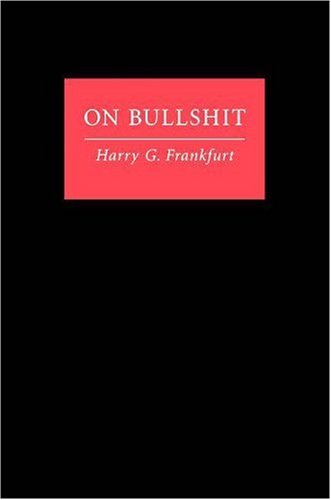
On Bullshit On Bullshit嚴格來說不是一本書﹐只是一篇哲學論文。這篇論文二十年前發表﹐一直寂寂無聞沉睡在哲學期刊中。零五年作者把論文印刷成精裝書出版﹐這本薄薄的小書卻平地一聲雷﹐連續高據紐約時報暢銷書榜達半年之久﹐一時間文化界爭相討論Bullshit現像。Bullshit大約可以譯為廢話﹐但中文廢話始終沒有英文Bulshit般傳神。廢話誰人都懂﹐每天我們也聽到不少﹐可是從來沒有人為廢話介定精確的定義﹐亦沒有任何準則去衡量一句廢話有多廢。這篇論作了前無古人的創舉﹐用分析哲學的方法去研究何謂廢話﹐以及廢話對社會的影響。

這本小書始終是學術論文﹐內容艱深難懂涉及大量哲學慨念﹐並不是寫給一般讀者的普羅讀物。不過若果能耐心細閱全文﹐作者的廢話理論很富啟發性。正如典形的學術論文一樣﹐從參考文獻引經據典出發﹐再推論申延出嶄新的理論。論文第一部份考究Bullshit一字的起源﹐追朔至另一英文古字Humbug。作者花了很多篇幅去論述Bullshit和Humbug的微妙差異﹐亦同時指出廢話與謊話是兩個完全不同的慨念。其後作者引用分析哲學大師維根斯坦(Wittgenstein)的方法﹐去介定廢話一詞的定義。作者詳細比較癈話(Bullshit)﹐謊話(Lie)和大話(Buff)的分別﹐指出三者雖然相似﹐但本質上完全不同。三者在講者腦中由不同的慨念構成﹐而聽者腦中亦要用不同慨念去衡量說話的真假。

最後一部份總結廢話理論和提出對現今社會廢話泛濫作出判批。作者認為廢話對真相的傷害﹐遠比謊話還嚴重。說謊話是刻意地誤導他人﹐但說話的人本身先要知道什麼是真相﹐才可以把真相倒轉成為謊言。說廢話的人並不理會說話的真假﹐是真也好是假也好﹐他說廢話只是要達到某些目的﹐說話內容毫不重要。現今社會到處充斥著廢話﹐人們漸漸變得不再關心真假﹐甚至認為根本沒有分所謂的真假﹐完全與追求真理背道而馳。

On Bullshit是本奇書﹐四分一張紙大小印刷﹐薄薄的六十多頁卻要賣加幣七元。買回來不到一個小時就看完﹐起初有點被騙的感覺﹐甚至有點認為這書本身就是一個廢話。除了這本書外﹐我還買了另一本Bullshit and Philosophy﹐成本書二百多頁就是用來解釋On Bullshit的理論。當我再把小書翻讀多一遍﹐才慢慢欣嘗到這篇論文何以被譽為經典。這兩本書同是大學哲學課的課本﹐今個學期沒有時間讀那班﹐行書店買其他課本時看見﹐只好買回來自修學習。廢話與哲學﹐這是一個很有趣的課題啊。